Navigation
Articles · Phishing · 4 min read
How to spot phishing
Phishing is a message that impersonates someone you trust to steal something you'd never hand a stranger — a password, a code, a card number. The channel changes; the trick doesn't. Three tells expose it every time.
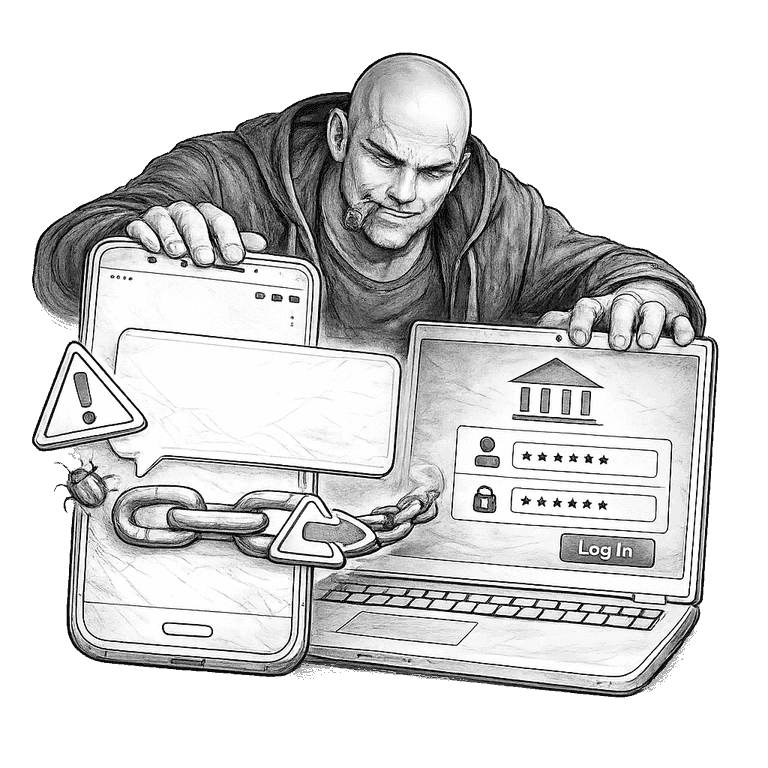
1. It arrives with a deadline
'Your account will be suspended in 24 hours.' 'Pay the fee today or the parcel goes back.' Real companies can wait while you check; phishing can't — the pressure exists to stop you from checking. Urgency plus a threat is the shape of the trick.
2. It asks for what no one legitimate asks for
Passwords, one-time codes, full card details, gift cards. No bank, courier, or platform collects these through a message — that's precisely why scammers have to ask. The moment a message wants one of them, you have your answer.
3. Its link is a door you'd never walk through yourself
The link text says your bank; the address underneath says something almost like it — extra words, swapped letters, a strange ending. Don't inspect it, sidestep it: open the app or type the address you already know. If the alert is real, it will be waiting in your account.
Phishing isn't just email
The word was born in inboxes, but the same trick now knocks on every door you own.
By email
The classic: a 'security alert' linking to a pixel-perfect copy of a login page
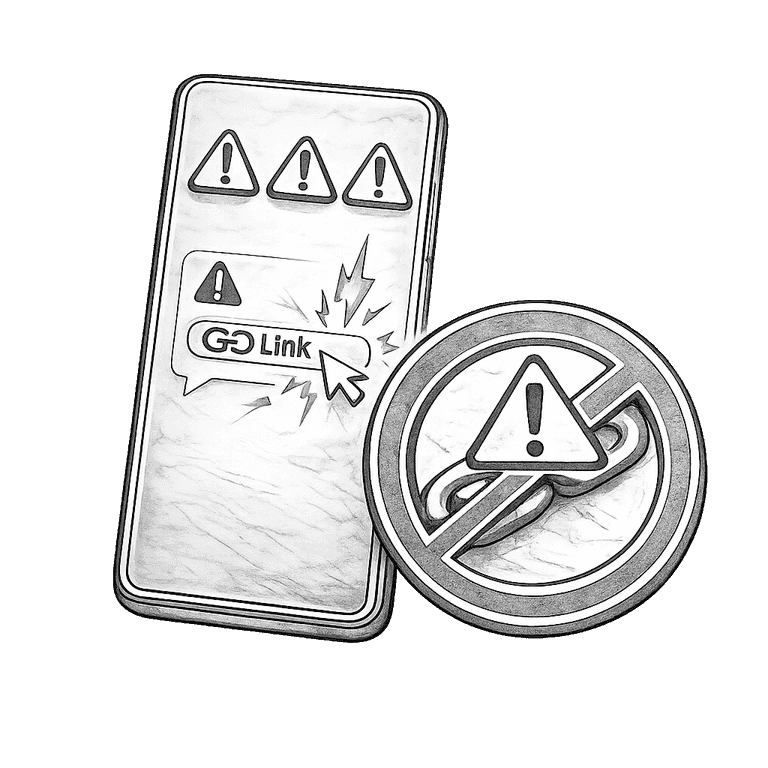
By text
A parcel fee, an unpaid toll, a bank warning — and one link to settle it
By phone call
'Your bank's security team', asking you to confirm a card number or read back a code
By direct message
A friend's hacked account asking for a quick favour, a vote, or money
Different doors, same knock: a trusted name, a manufactured deadline, and an ask no real company makes. Learn the knock and the channel stops mattering.