Navigation
Articles · Identity theft · 2 min read
What is identity theft?
Identity theft is someone using your personal details — your name, birth date, account numbers — to pretend to be you. It runs in the same four quiet steps:
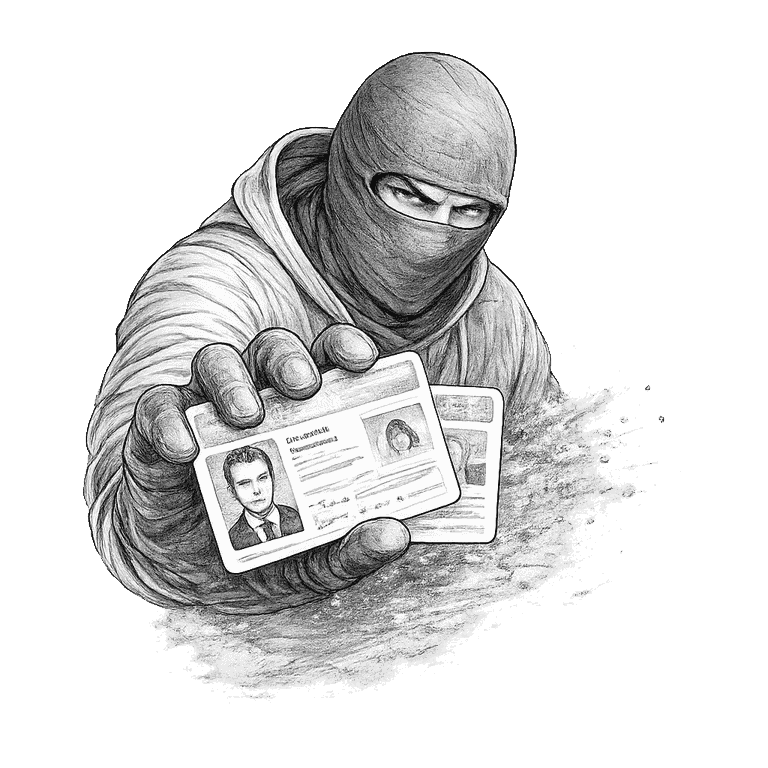
Collect
Your details leak or get stolen
A data breach, a phishing message, a stolen wallet, an over-shared profile. Name, birth date, address, a card or ID number — collected piece by piece, often from different places.
Impersonate
They become you on paper
To a bank, a lender, or a phone company, you are a handful of details. With enough of them, a stranger answers the security questions better than you would.
Cash in
Your name pays their bills
New cards, loans, phone contracts, purchases, even tax refunds — all opened and spent in your name. The money goes to them; the debt stays with you.
You find out last
The bill arrives first
A charge you don't recognise, a letter about an account you never opened, a loan application rejected out of nowhere. That's identity theft — a crime designed so its victim is the last to know.
The theft itself is silent — the noise comes later, from your own accounts. Guard the details at step one and steps two to four never happen.
Also worth knowing
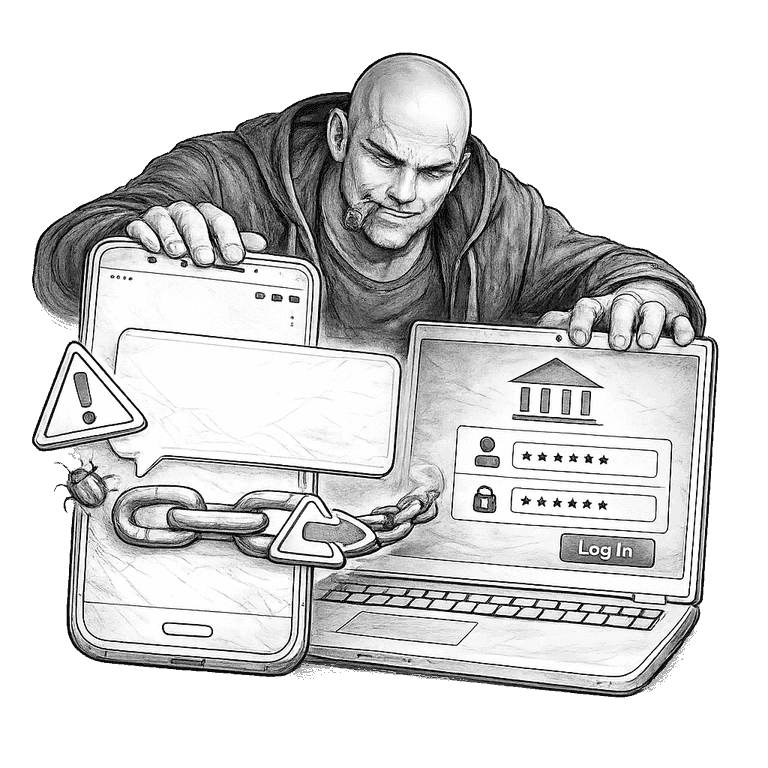
Phishing · 4 min
How to spot phishing