Navigation
Articles · Phishing · 2 min read
What is phishing?
The name explains the whole crime. It's fishing — respelled by the hackers who invented it — and it always runs in the same four steps:
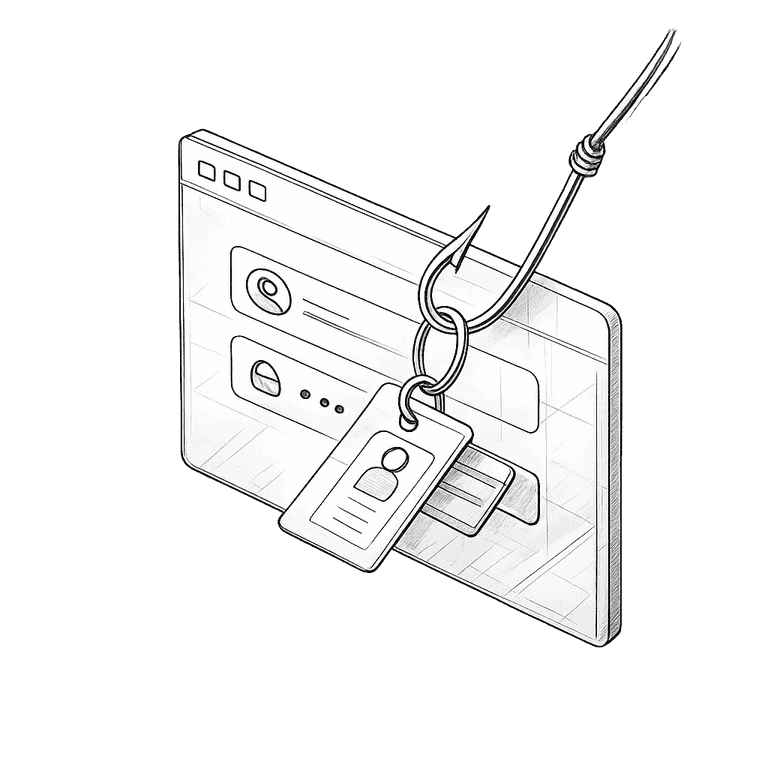
Bait
A name you trust
The message wears your bank's logo, a courier's colours, or a colleague's name. Bait only works if it looks familiar.
Hook
A reason to hurry
A suspended account, a missed parcel, a final warning. Urgency is the hook — it stops you from checking.
Catch
What you type and give away
The link lands on a fake page. The password, code, or card number you enter is the catch — reeled straight in.
Done
No hacking required
No malware, no broken code — just a believable message and a busy person. The password works, the money moves. That's phishing.
Everything phishing-shaped fits this frame — emails, texts, calls, DMs. Spot any one of the first three steps and step four never happens.
Also worth knowing
Phishing · 4 min
How to spot phishing